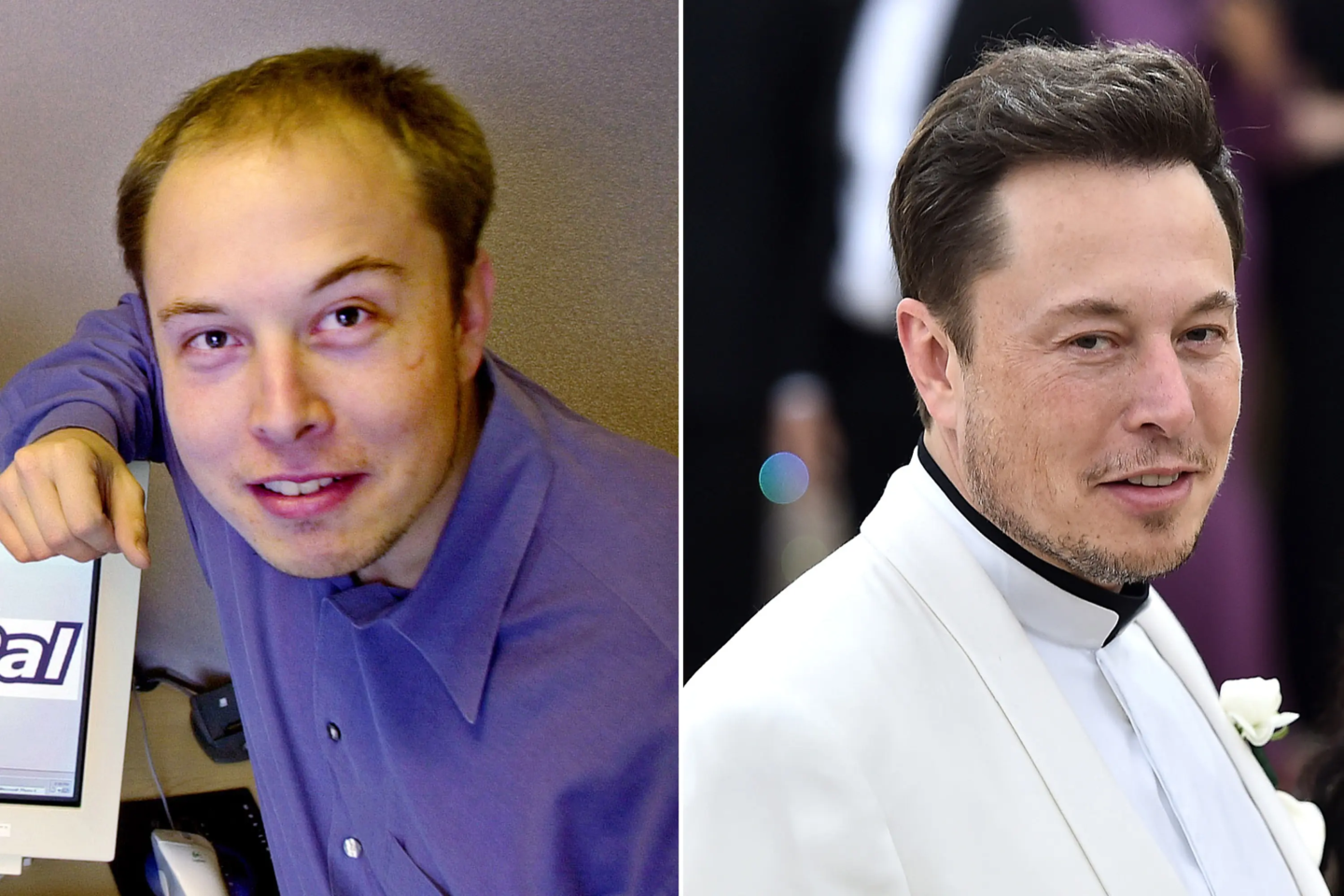
I'm sure you all know what a hair transplant is, but for those who don't, it is a surgical procedure that moves hair follicles from one part of the body (usually the back or sides of the scalp, where hair is more resistant to balding) to a bald or thinning area. It is used to treat male pattern baldness (androgenetic alopecia). When you see those "celebrity hair line transformations" 99,99% of the time it was a hair transplant.
Two main techniques for hair transplantation
There are 2 main techniques that are going to be used for a hair transplant. They are:
- FUT (Follicular Unit Transplantation)
- FUE (Follicular Unit Extraction)
FUE is going to be the most common method of the two.
What is a "Follicular Unit"?
A follicular unit is a group of hairs on your scalp that contain a few terminal hairs (thick hairs). These are what is used for the donor follicles in a transplant and are often found in non-alopecia sites. Non-alopecia sites refers to the hairs are genetically resistant to androgenetic alopecia like the back of your head. As you can see, the people that are fully bald basically always have hair on the sides and back since they are very androgen resistant follicles.
What is the difference between FUT and FUE?
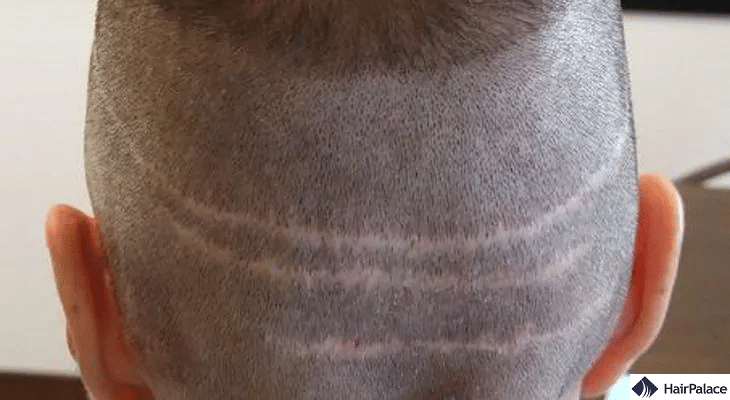
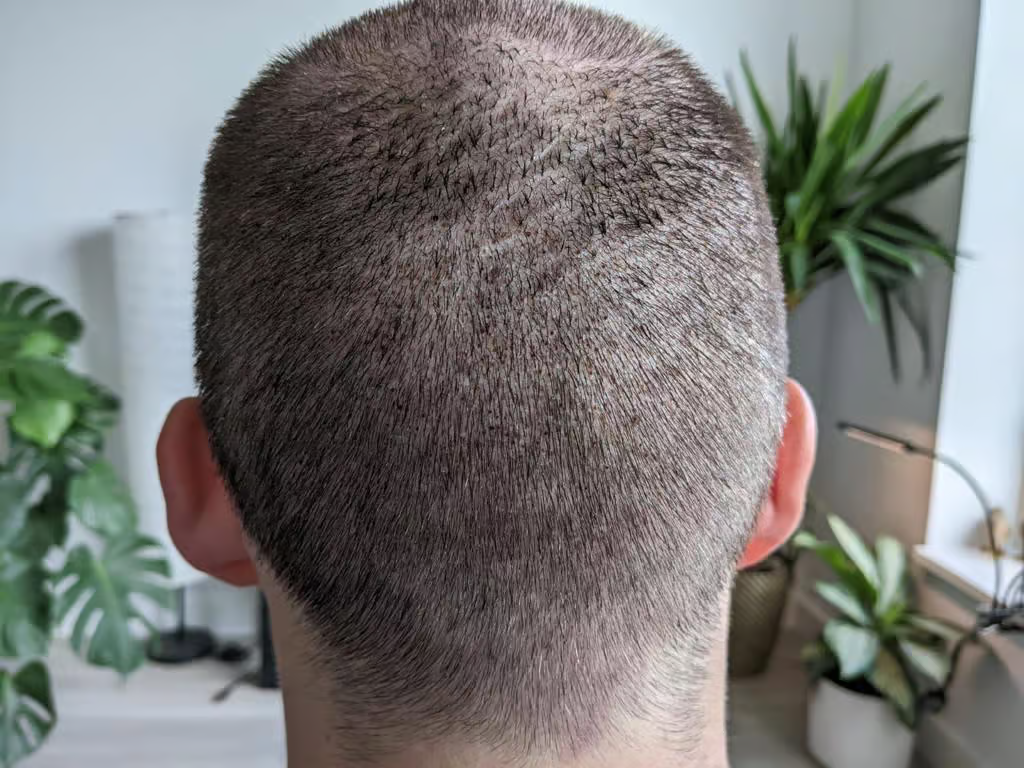
The FUE technique removes individual hair follicles to transplant whereas FUT cuts a strip of skin from your scalp and uses the skin to remove the follicles leaving a noticeable scar on the back of your head which you will obviously be able to cover once you grow out your hair but it forces you to rock a cut that has long sides and back. FUE so much more ideal if you consider getting a transplant I would stress getting FUE over FUT
Scar example
FUT scar:
FUE scar:
FUT vs FUE
FUE is going to:
- be less painful and have less post-op pain
- have quicker healing times
- allow other hairs, say beard or body hairs, to be used also
- not have obvious scaring
However FUT is going to
- Have a shorter operation time
- and be quicker for follicles to he harvested
How to know if you are a good hair transplant candidate?
Familiarising yourself with the norwood scale
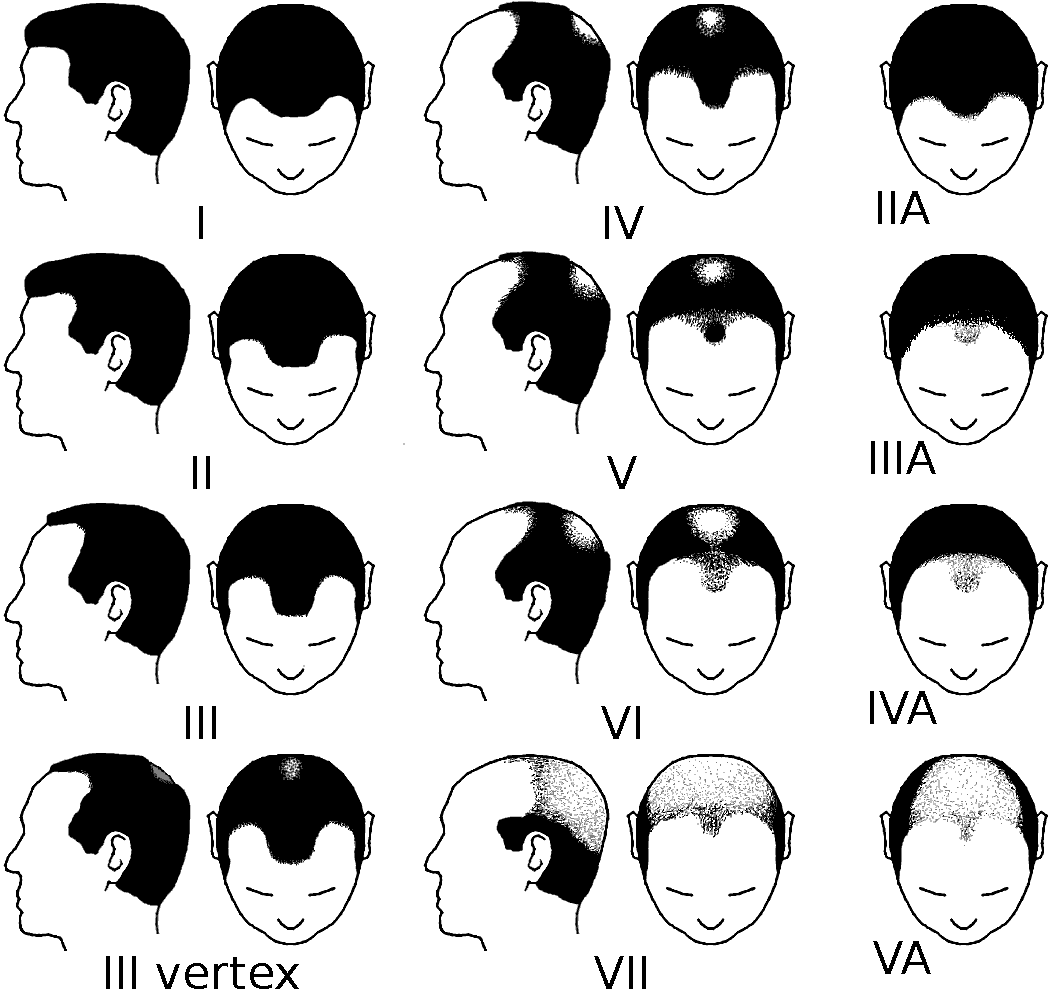
This is good to gauge what place your hair loss is at. Hair transplants past stages 5+ are going to be very difficult and will require thousands of grafts to provide optimal results. This is why it is imperative you notice any loss early, and prevent any further loss. The ideal candidates have naturally thick and dense coverage and the results are more likely to be aesthically pleasing and less obvious.
You must be on 5α-Reductase Inhibitors prior to a hair transplant
Doctors might not give a shit, but the ones that care about their reputation and don't just want your quick money will also make this extremely clear. You must be on a 5α-Reductase Inhibitors before a hair transplant. You need to stabilise your hair loss. You don't know how much more hair you are going to lose in the future, so take a 5α-Reductase Inhibitors and stop the hair loss in it's tracks. If you get a hair transplant without a 5α-Reductase Inhibitors, the transplanted hairs (which are resistant to androgens since they were taken from the sides or back) will remain there, while the rest will continue to recceed and thin. It will leave you with results looking like this:
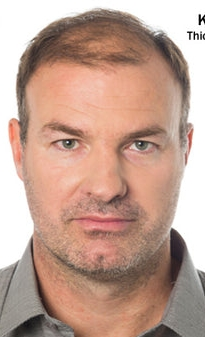
The hair transplanted hairs will remain, but the test will continue to fall. You may think you can just get another hair transplant, but that is not the case necessarily. You are not going to have enough doner hair to transplant a fully bladed head.
Hair transplant process for FUT and FUE
FUT
1) Incision is made and a strip of your skin is cut out of the back of your head2) Donor strip is prepared by removing excess tissue3) Individual follicles are then harvested from the strip4) Follicles are then transferred/transplanted into the targeted area
FUE
1) A device is used to remove hair follicles from the donor site or it can be done by removing individually using forceps2) They are then cleaned and transplanted
Potential complications
1) Edema - swelling because of too much fluid trapped2) Folliculitis - inflamed follicles3) temporary numbness4) infection5) hair transplant fails because hair follicles are too thin and hairline just ends up looking weird