Clenbuterol is an oral β2-Receptor agonist and bronchodilator. It is also available as an injectable.

It is being used in a clinical setting to treat individuals with breathing disorders like asthma.
Salbutamol is a weaker version of Clenbuterol.
Why use this compound in the first place?
- It can increase your BMR dose-dependently.
- Also it is extremely cheap. Average UGL prices are around 10-20 bucks.
- Not a molecule of side effects if you manage them correctly.
- Reduces appetite since it is a stimulant.
- Causes epigenetic changes that make fat loss easier in general.
- There is no scientific evidence suggesting that Clenbuterol may be anti-catabolic, though it is worth mentioning. At the very least it isn't catabolic in comparison to T3.
Unlike what many believe, there aren't many β2-Receptors in the heart.
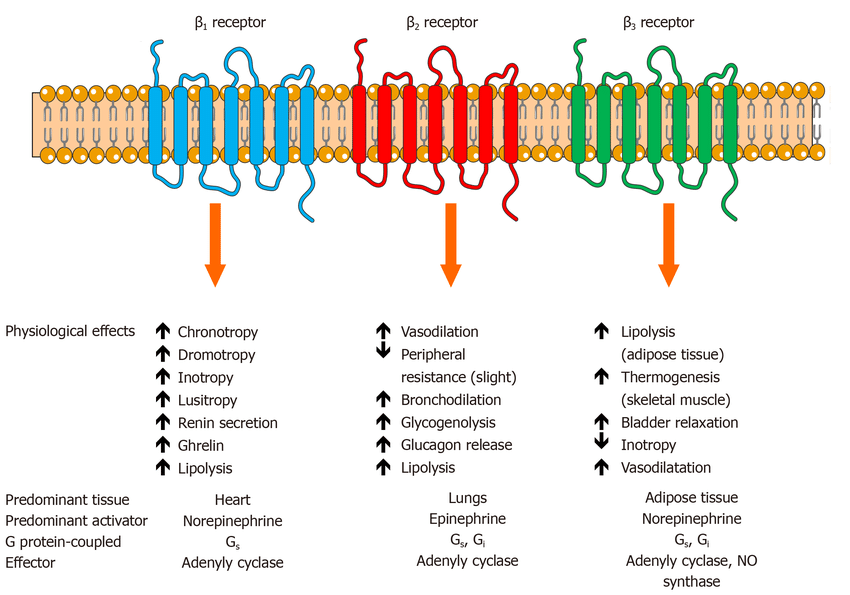
There appears to be some downstream cascade process Clenbuterol causes that mediates the heart-related side effects.
Most studies say that Clenbuterol appears to be selective, depending on the quantity of the compound it may loose that selective property.
Some of these heart-related side effects include:
- Hypertension
- Tachycardia (faster heart rate)
- Vasoconstrictive properties
How to reduce these side effects?
Nebivolol is the most selective β1-Receptor blocker. That receptor is primarely present in the heart like noted earlier, meaning it will counter any heart-related side effects.
Unfortunately Nebivolol looses that cardioselectivity above dosages of 10mg, meaning it will block both β1- and β2-Receptors.
Dosing advice
You need to titrate your dosages up slowly until you reach a maximum of 100-120mcg. Only go above 80mcg if you are using a beta-blocker like Nebivolol.
Ideally titrate that dosage up in 20mcg steps every 2-3 days to check for tolerance.
I wouldn't recommend going above 200mcg with a beta-blocker, that should be the maximum dosage of Clenbuterol.
Keep your Clenbuterol-Cycles short
The β2-Receptor downregulates after being stimulated, meaning you should keep your cycle to a maximum of 4 weeks.
"Clenbuterol treatment induced a significant (P < 0.01) down-regulation of beta-AR subtypes."
https://pubmed.ncbi.nlm.nih.gov/8585662/
How many calories will I burn daily in terms of BMR?
- 40mcg -> 80–100 kcal
- 80mcg -> 120–160 kcal
- 120mcg -> 160–240 kcal
- 160mcg -> 240–300 kcal
- 200mcg -> 300–400 kcal
Take these measures with a grain of salt.
Conclusion
Clenbuterol is a cost-efficient and potential alternative to more effective fat burners like DNP.
This review should give you a clear understanding of the pharmacology behind Clenbuterol.